
Following the Paper Trail
By: Keanu Agard
This story has been updated to reflect the correct information.
CSI is known as a commuter school, with only 4% of its students living in campus dorms; the other 96% of students reside throughout the rest of New York City’s five boroughs. Despite this significant percentile, many enrolled commuting students are feeling neglected by the Student Government’s decision to cut the ferry shuttle service.
With CSI’s continuously growing population, its student body extends beyond its 7,000 plus students who reside on Staten Island. There are over 2,317 students who live throughout the other four boroughs. 1,823 of these students live in Brooklyn (Kings County), along with 235 from Queens, 158 from the Bronx, and a little over 101 students from Manhattan.
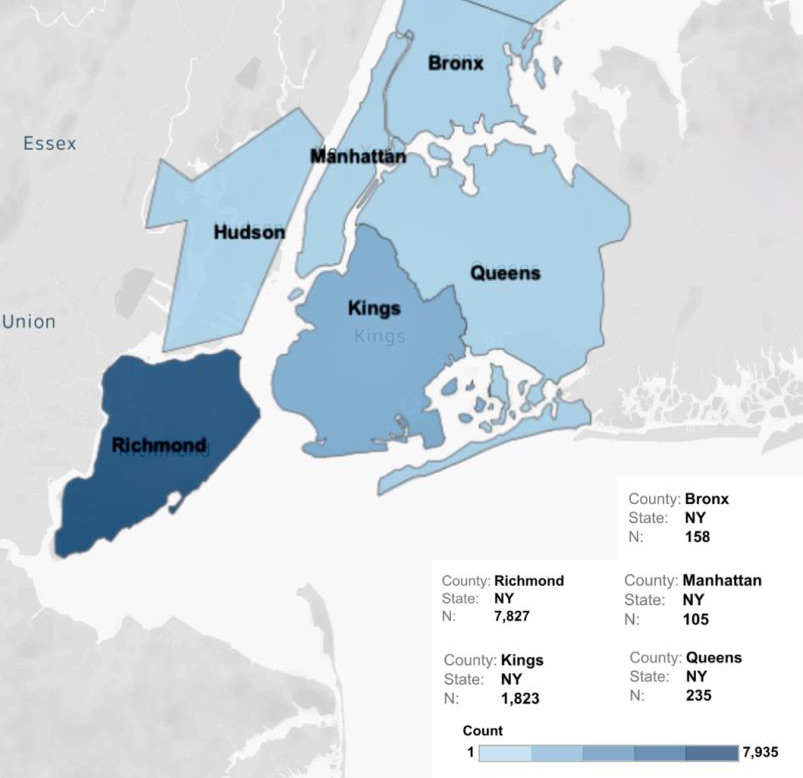
The suspension of the ferry shuttle service, a vital transportation link for many, has left hundreds of commuting students and members of faculty scrambling for alternative routes to and from the campus.
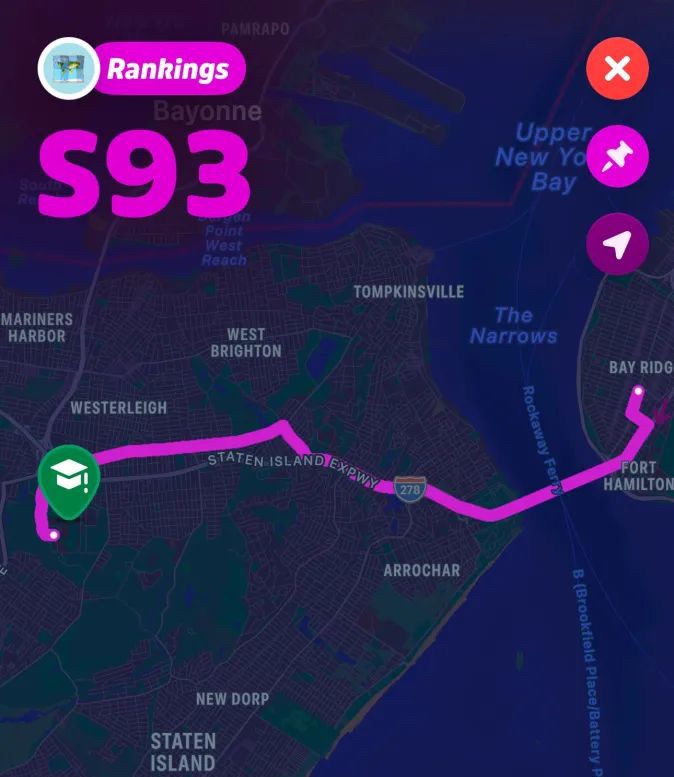
“For students like myself, commuting to and from CSI can be a hassle. It’s a known fact that public transportation to and within Staten Island is unreliable,” said Aissatou Diallo, a Senior who commutes from Brooklyn. “Due to there being no ferry shuttle, I now have to rely on the S93 to get to and from the campus.”
The S93 MTA buses are often crowded due to the added influx of CSI students, staff, and members of the general public. As a result of this, the wait times can extend into over 30 mins to an hour causing lines for the bus to wrap around the sidewalk. These delays can cause the bus to run behind schedule, resulting in students being late for class.
“There was a Constitutional Referendum that took place, and on it we had to decide on how to change the funding as there wasn’t enough funds to fully support the ferry shuttle,” said a member of CSI’s Student Government. “If we didn’t pass this Referendum, we would have lost the funding for basically everything else.”
Those funds are drawn from our Student Activity Fees, $138.15 for full-time students and $102.15 for part-time students, and allocated to fund educational and co-curricular programming, leadership development, cultural and social events along with various community initiatives reflecting the needs of the student body of the College. According to that member, $44 per-student was being deducted each semester and divided between the operation of the ferry shuttle and loop bus service.
However, many view this explanation for the shuttle service’s suspension as an excuse, pointing out the many other recent and unwanted campus changes, such as the painted pedestrian walkways and bike paths. Many believe that the funds could have been put to better use.
In a letter dated June 10, 2024, CSI President Timothy G. Lynch announced the significant change to campus transportation services. Citing a recent student election where 80 percent of voters chose to reallocate the student activity fee, Lynch stated, “I am writing to provide important updates regarding our 100 percent student-funded transportation services on campus… As a result of this election, the funds previously dedicated to the shuttle service will be redirected accordingly.”
According to a Student Government Representative, votes were cast over the period of two weeks during the Spring 2024 semester with a turnout ranging from approximately 850 to 1000 students, which later resulted in the constitutional referendum being made and placed into effect as of Fall 2024.

“It was so slimy how they framed it when they asked people to sign a petition to get rid of the shuttle last year,” said Sarah Ahmed, a Junior who commutes from the North Shore. “They explained how only 3 percent of students used it while everyone’s student activity fees paid for it, failing to mention that the 3 percent includes hundreds of commuting students.”
Will this criticism be seen and taken lightly?
Many wonder what the school’s next steps are to cater for its many commuters. As the semester comes to an end, will commuter voices be heard in time for the upcoming 2026 Spring semester, or will we have to continue feeling unseen?
