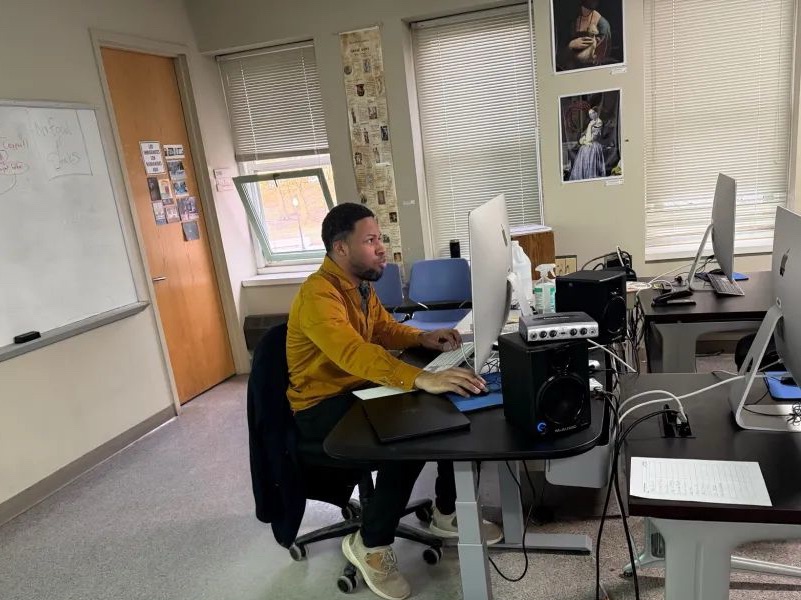
Lovell’s journey has opened a whole new world in film production. From short films, narratives, and documentaries, his work never disappoints.
By: William J. Givens IV
Mitchell Lovell often thinks back to a particular Sunday evening, a time when his future felt far yet so near. It was a moment of quiet contemplation amidst the chaos of life, where the weight of decisions hung heavy in the air, and the next step remained unclear.
It all started in his senior year of high school, unaware of what his future would hold, Lovell’s world of film production began with an eagerness for storytelling. But it wasn’t until he attended CSI that his creativity expanded beyond that realm. Throughout his years studying at CSI, Lovell began to collaborate with a group of filmmakers whose main focus was geared toward short film content creation within Staten Island.
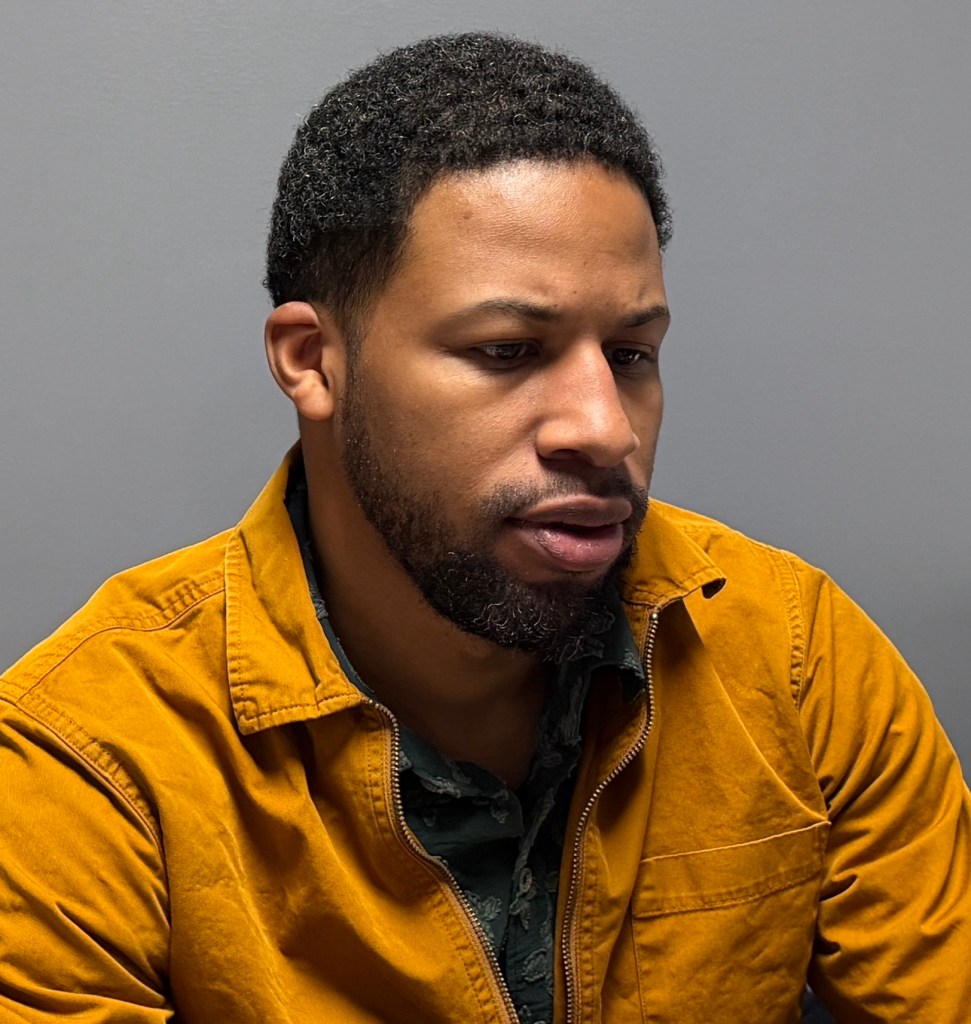
As Lovell began to acclimate to his newfound environment, he was able to form a plethora of connections, landing him a role as Assistant Director for a 1980s Blaxploitation-style short film, along with many other black creatives, becoming one of his defining achievements to date.
“The camaraderie on the film set led to me gaining more problem-solving skills,” said Lovell. “A lot of unexpected things can happen on film sets, and not having this skill could prevent many projects from getting completed.”
Aside from having many responsibilities as an Assistant Director, making sure the angles of various shots work, budgeting, and payroll are of paramount importance. All these issues can be difficult to manage and get done successfully without sacrificing the quality of the film.
Lovell, now a Macaulay Honors Program graduate, has reached a major turning point in his career
“I had no job out of college,” said Lovell, “And being hired here was actually where my story should begin.”
Back in 2015, Lovell won his first grant for a video production project, and by him receiving that grant opened up many more doors for him, especially in the field of curation growing and establishing himself in the field of curation. Lovell began to host Q & A’s along with helping the technical team for the Queer Voices, whose mission was to create shows for audiences throughout NYC.
After a couple of years, he pivoted into the world of film festivals and curation. He was very involved in various works around Staten Island with Richmond City Media and SI ARTS, to name a few, which led him to pursue a side career in narrative filmmaking with a journalistic style.
Unfortunately, now that he is a full-time educator, these opportunities are quite different.
Andrew Tavarez, one of CSI’s media department lab technicians, described Lovell as a hard-working individual who will not let things slide. Lovell’s approach has impacted many students at CSI, being home to some of their best films.
Lovell’s knowledge of equipment and filming angles is what makes him one of the best.
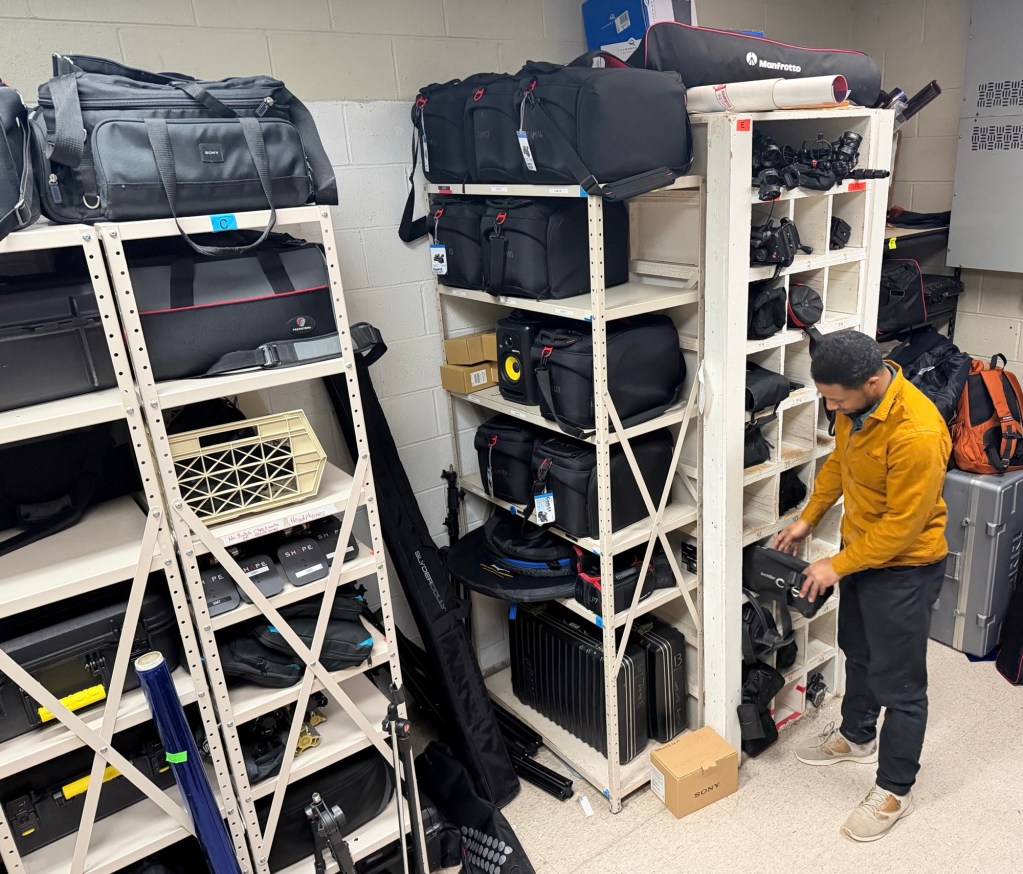
“He is very strict with his work,” said Andrew. “Which is a good thing because it pushes you to be the best you can be; that is one of the best things about him.”
While teaching at CSI, Lovell often tells his students the importance of always staying busy by working on something, whether it be writing, post-production, or everything involved in the process of film production. Many students these days simply aren’t working enough on the process, and they should prioritize manageable films over feature-length films. The most important part is to continue working.
“Never stop producing work,” said Lovell. “Sometimes, quantity is not better than quality.”