From Hanging Upside Down to Studying in Your Sleep — The Weirdest Ways You Can Prep for Finals
By: Sarah Ahmed
While many CSI students will turn to traditional studying methods for impending final exams, others are choosing to fall back on what they know works best for them, and it doesn’t merely involve taking notes.
Three students from different majors will spend these next two weeks reviewing material before the first scheduled final exam day of Friday, May 16th. Nada Nasr, a Biology major with a minor in Psychology, likes to study upside-down.
“I’ll read things over and over and it just won’t click, so I change how I’m sitting,” said Nasr. “If I end up in bed, which I usually do, then lying upside down is a useful change of pace.”
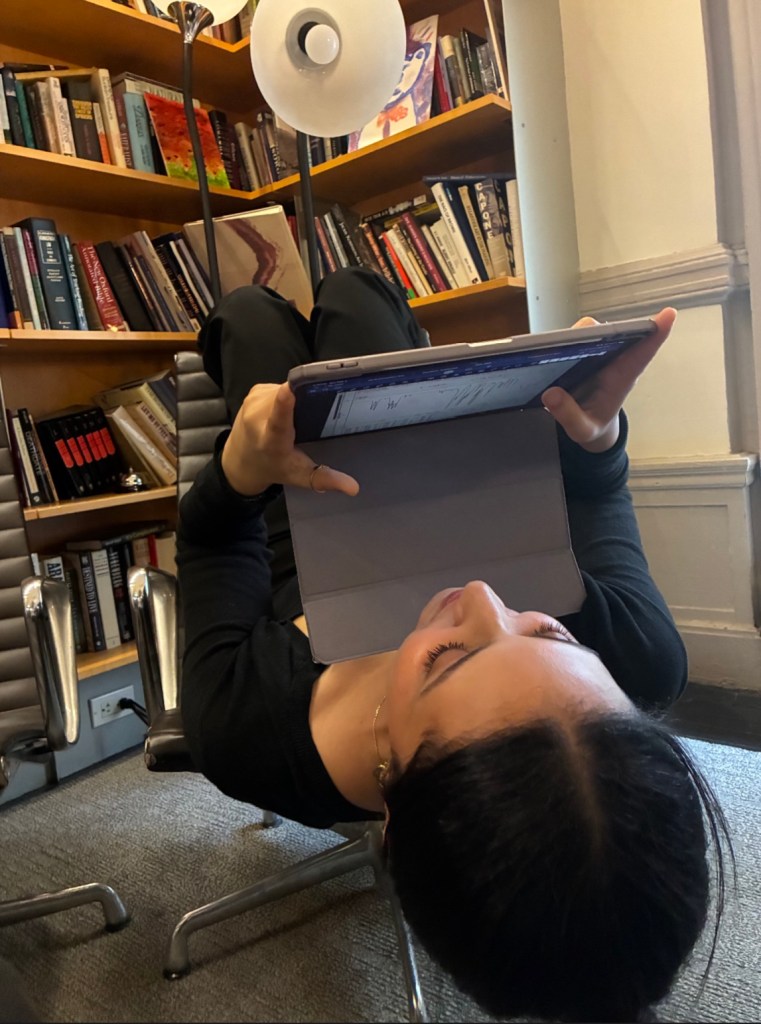
With her upcoming Biology and Organic Chemistry exams, Nasr estimates she’ll need to memorize around 300 pages of material, including biochemical reactions, processes, and definitions. Whenever Nasr feels she isn’t retaining information, she’ll hang upside down off her bed while reading notes for 30 seconds, then sit upright to verbally summarize or jot down what she retained. After that, she’ll repeat the process.
Her technique is rooted in actual biology. The rush of blood to the brain can temporarily increase oxygen flow and sharpen focus, but the method has its drawbacks. Nasr admits feeling lightheaded after a few rounds, and extended time in an inverted position can reduce blood pressure and heart rate, leading to dizziness and impaired cognition.
There’s little research on whether short bursts have the same effect, but for Nasr, the method feels effective. Regardless, there are other strategies CSI students could test out. While the idea of learning unconsciously is often joked about online, research suggests the approach has some merit.
“I went into finance because I like money, I like math, and finance is a mix of both,” said Luke Zaloom, a Business Finance major with a Math minor. “I don’t want to just pass the test, I want to remember this stuff afterward.”
Zaloom’s solution: studying even while he sleeps. To help with long-term retention, Zaloom records himself reading his class slides aloud and plays the recording through headphones as he sleeps the night before an exam.

Studies examining language learning suggests this can stimulate electrical activity in the brain associated with implicit memory encoding and consolidation. This approach is most effective when reinforcing material you’ve already reviewed rather than learning new information.
Meanwhile, Vlada Kuzina, a Nursing student, has her own pre-exam ritual. She washes her hair on the Sunday before an exam, then doesn’t wash it again until the test is over.

“The knowledge is embedded in the roots of my hair, why would I wash away and start fresh on the day when I need it most,” said Kuzina. “Braiding it makes me feel confident, like I’ve already done everything I need to, so I know I’ll do okay.”
Research backs the power of mindset on performance. Even arbitrary actions, if meaningful to the individual, can lower anxiety and improve performance by reinforcing motivational and regulatory states. Kuzina has stuck with her ritual since sophomore year of high school.
Still, not every student gets through finals without questioning their academic path. Jennifer Durando, Director of Academic Advisement, noted that students at CSI typically change their major twice before graduating. For some, it’s the disillusionment of following their parents’ wishes when entering freshman year and for others, it’s the weight of difficult examinations and courses that leads to a major switch.
“Sometimes it’s just one semester that’s tough, and we understand that they’re a person before a student,” said Durando. “My advice is to always study what you want to know more about.”