By: Sarah Ahmed
Jane Doe scans her group of friends. Some sigh from exhaustion, some glance around the hotel lobby, rubbing their hands. She approaches a woman holding a Trinity Blood costume. “Do you still need a hotel room? Some people from my group dropped out.” The woman nods. Jane walks the lobby, asking others if they want to share the room to split the cost. Back in their shared room, they unpack bags and assemble cosplays. One girl raves about Homestuck, meticulously listing all her favorite details from the show. She stands up, grabbing her bag quickly, and rushes to the bathroom. “I need to get into my troll makeup. Don’t come in.” Jane sits at the vanity, opens her makeup case, and applies her face paint, then her lipstick. A chemical-like smell starts drifting through the air. Still seated, she glances around the room, searching for the source. Nothing. She stands and walks slowly toward the bathroom door. The smell intensifies. She knocks. No response.
Anime conventions are no stranger to fandom culture veering into a space of obsession. Absurd incidents are regarded as almost commonplace at larger events like Anime Expo. First organized in 1992, the event has become the largest anime convention outside of Japan, with over 100,000 attendees typically arriving on the first weekend of July within the Los Angeles Convention Center. It’s envisioned as a place of celebration for popular Japanese culture, including competitions for fan creations, panels with famous voice actors, and vendors selling well-sought after fan-created artwork and merchandise. Cosplayers meticulously craft their costumes, spending weeks, sometimes months, perfecting every detail to showcase at the convention, while others immerse themselves so deeply into their fandom personas while in attendance that they lose touch with the norms of social interaction. The convention floor becomes the stage for this intensity—a place where the lines between admiration and obsession blur, where some fans behave as though they’ve stepped into the worlds they idolize.
Every year following the event, there is always a plethora of horror stories shared by event-goers. Certain fandoms, like My Hero Academia, have gained infamy within the anime community for having “crazy, social rejects.” Yearly, there are bizarre moments where panel speakers are asked inappropriate questions by fellow community members. A notable incident occurred in July 2024 when Justin Briner, the voice of Deku from My Hero Academia, was asked his opinion on a romantic relationship between the seven-year-old character Eri and the character he voices. Briner visibly recoiled at the suggestion, while the female fan giggled with delight at his discomfort.
Sexual harassment has become a disturbingly common experience for female attendees, who report being groped nonconsensually by fans who parasocially conflate their cosplay with the fictional character. More severe incidents have occurred in the past. In 2017, a few con-goers allegedly decided to have an orgy, resulting in the staff having to detain people. When it was revealed that one participant joked online about poking holes in condoms, staff advised those who participated in the orgy to go to the nearest health clinic to check for STDS.
Derogatory terms have emerged to describe individuals who are so obsessed with Japanese culture that they become socially ostracized. While the word “otaku” originally referred to a “geek” in Japanese, the term “weeb” has largely replaced it within American culture, carrying a negative connotation as a stereotypical male who rejects reality in favor of fictional female characters. Although the subculture itself isn’t inherently harmful, the troubling incidents at conventions raise the question of whether stronger fandom policing is necessary to rein in those who disregard social norms and cause chaos in these shared spaces. There are certain stories you would only encounter five pages deep into a Tumblr fandom forum, cautionary tales that circulate like urban legends in digital form. Joining a fandom almost always means undergoing the initiation ritual of discovering the batshit lore of its predecessors. And some are so infamous that you don’t even need to be part of its respective fanbase to hear about it.
At its core, fandom is about connection: to the art, the creators, and the fellow fans who share a common interest. However, large scale events dedicated to creating a shared fandom space allows individuals to step over a very thin line, where it’s not just about liking a show or a game anymore—it’s about being part of it, even to destructive ends.
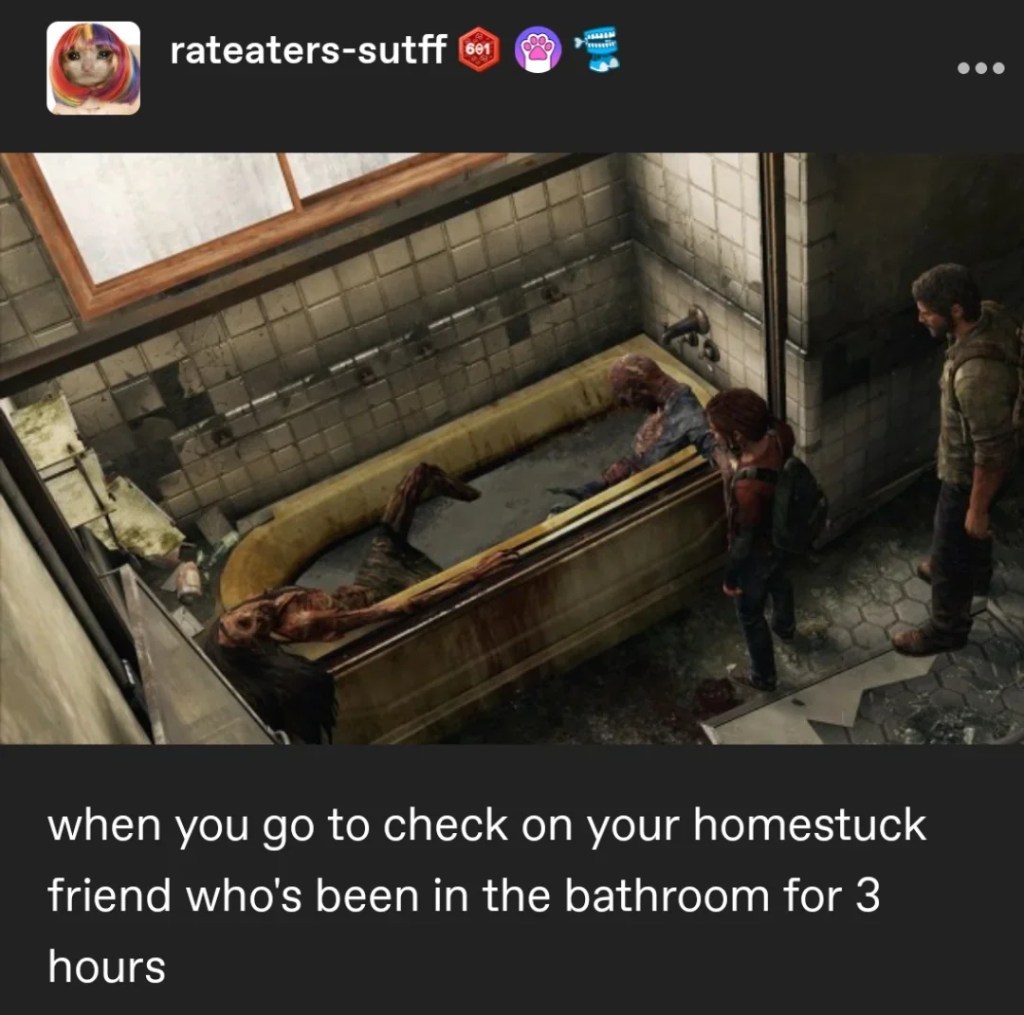
Jane slowly shimmies open the door, and gasps. The stranger is sitting in the bathtub, naked, her skin a slightly gray shade. The bathtub is half full of liquid. Bottles of rubbing alcohol and Sharpies are scattered around the bathroom floor. She says, frantically, “I was going to clean it up!”
The girl allegedly ends up with skin poisoning, and pays a $700 damage fee.