
Students and staff at CSI held a composting event as part of the school’s efforts to reduce waste on campus.
By: Jada Taggart
On April 14, students and staff collected food waste and prepared it for compost as part of the school’s sustainability program to reduce campus waste. The event was led by Nora Santiago, who oversees composting activities at CSI, and showed how food scraps from dining services can be processed instead of discarded.
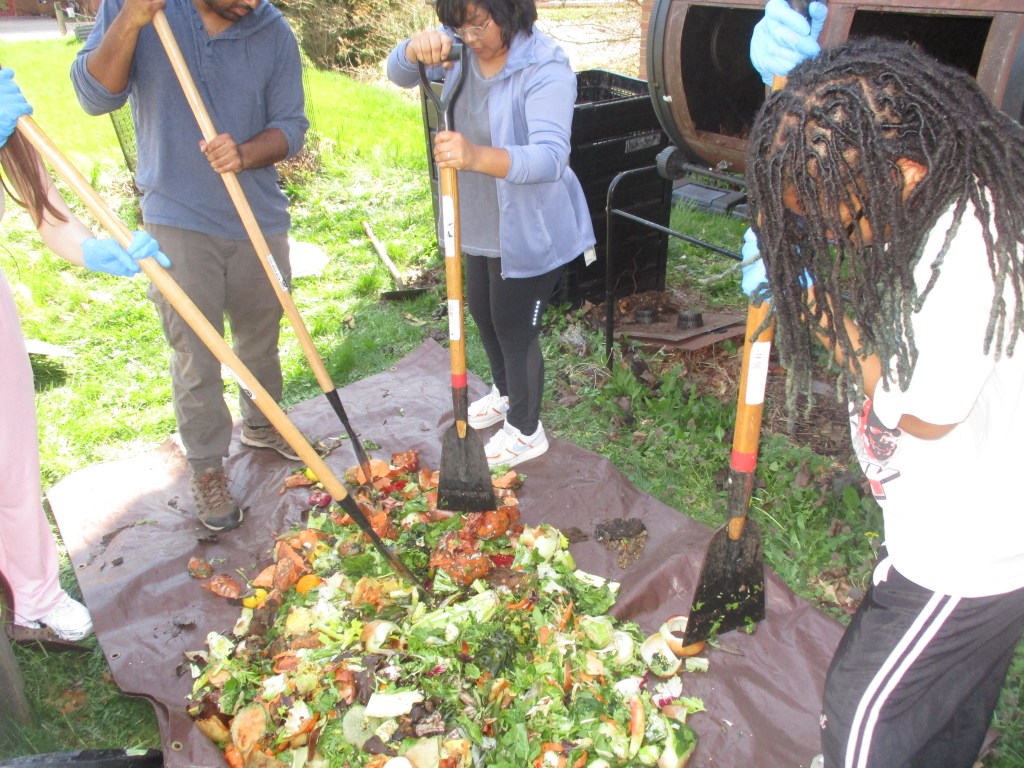
During the event, student workers gathered leftover food from dining services and sorted it to remove plastics, stickers and other nonorganic materials. The remaining waste was chopped into smaller pieces to speed up the composting process. It was then placed into rotating compost bins, where it broke down over about one to two months. Staff manually rotated the bins throughout this stage.
Once partially decomposed, the material was transferred to another bin for additional processing for about two more months before it fully broke down and was used for campus soil. Students working under Nora Santiago carry out each step of the process by hand.
Santiago said the program’s goal went beyond managing waste and focused on long-term environmental responsibility for the students and others who learn from them.
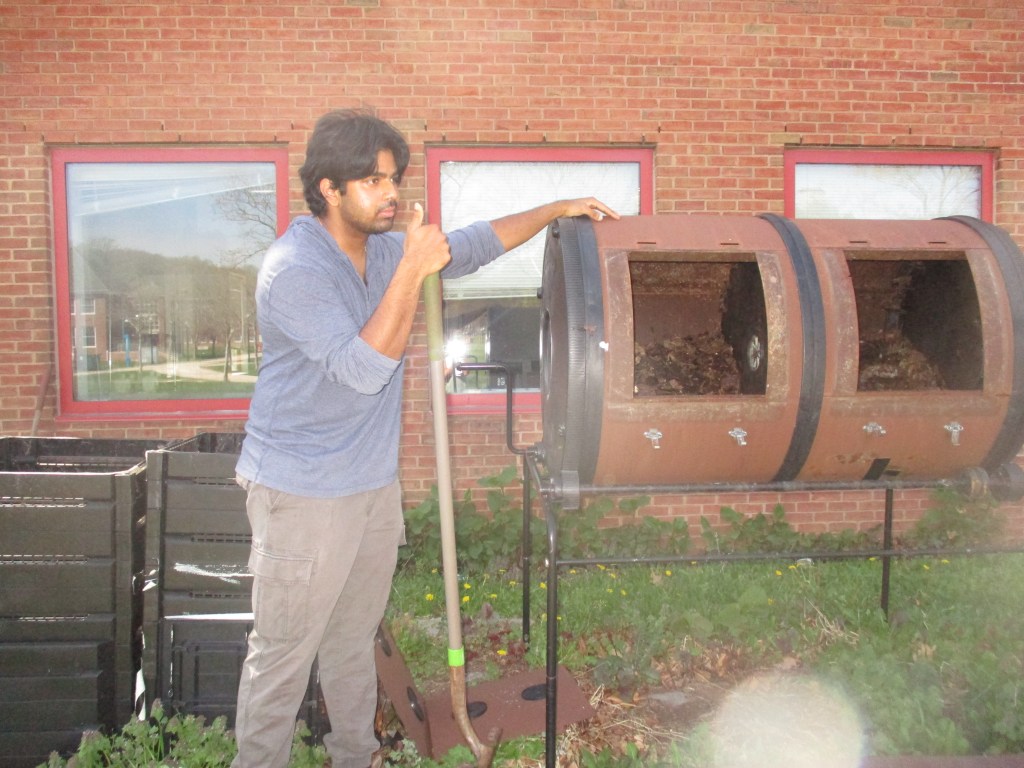
“Food is not a waste, think before you throw things out,” said Santiago. “This is your future, you are going to be suffering whatever happens to this earth, so you should care to make it better.”
Santiago said people should think more carefully about food waste before throwing materials away. She has advocated for more recycling bins across CSI so students have places to dispose of waste properly. She said students who take part in the program see how much effort goes into handling waste and how small actions can have a larger impact on campus.
“I look at this campus like a village,” said Santiago. “There is so much that can be done here.”
Students working at the event sorted waste and prepared food scraps for composting. They learned how to separate organic materials from nonrecyclable items and how the composting system works from start to finish.
Student worker King-McCall said the program connected to community values and opened her eyes to reusing resources in everyday life. Since she lives on campus, she said she tries to stay involved in how students handle their waste.
“Its about giving back to the community,” said King-McCall. “Living expensive is hard enough. We should all try and find ways to reinvent things.”
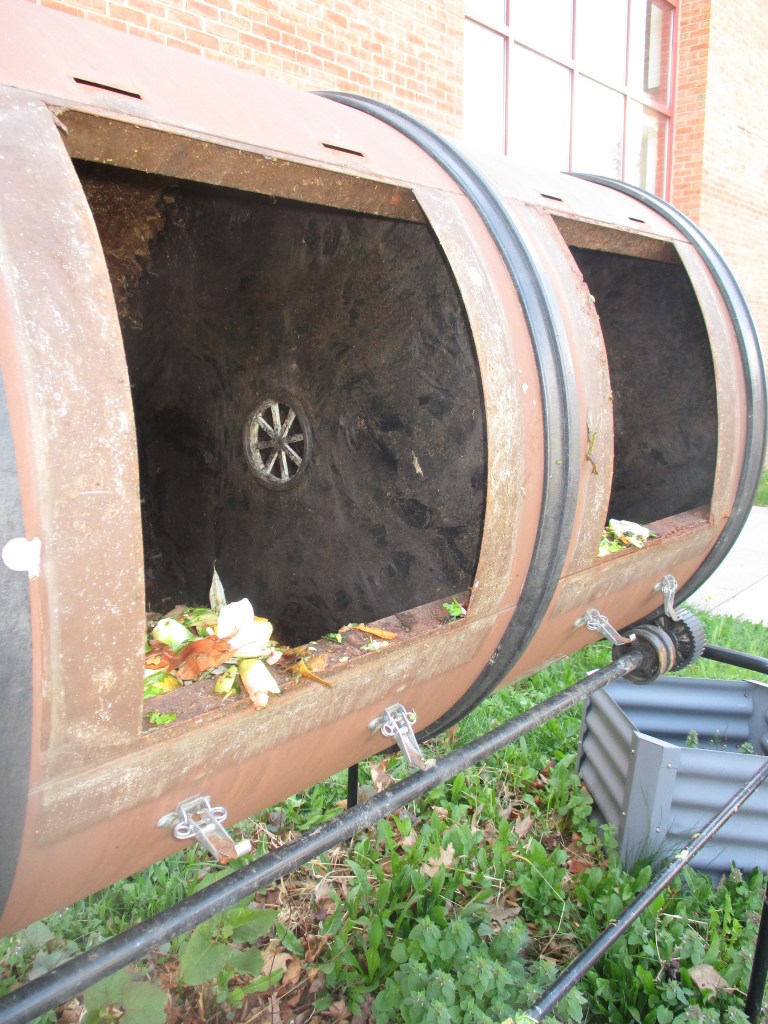
The composting system required ongoing effort beyond the event. Materials had to be consistently sorted, monitored and moved through different stages of decomposition. Food waste placed in the bins broke down over several months before becoming usable soil. The finished compost was then used in campus gardens and green spaces to support plant growth.
Even though the process took time, it allowed CSI to turn organic waste into reusable soil. This reduced the amount of waste sent to landfills and supported landscaping efforts across the campus.
As the event continued, student workers reflected on the process of handling food waste and how it moves through each stage of composting. Students who worked the event said they became more familiar with how materials are sorted and how waste can be reused through the system.
One student, Awai, said working in the program changed how they view everyday waste.
“I wasn’t big on compost till I started working here,” said Awai. “I’m so cautious now I see people litter and throw things out that can be reused. It’s upsetting.”
