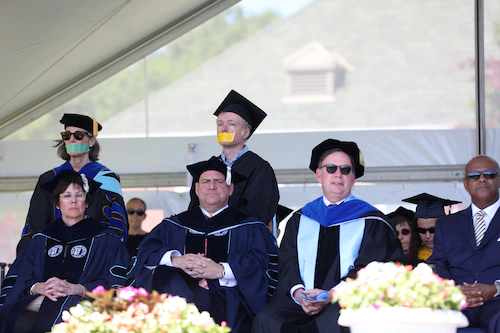
President Lynch denies live speeches two years in a row.
By: S. Manai
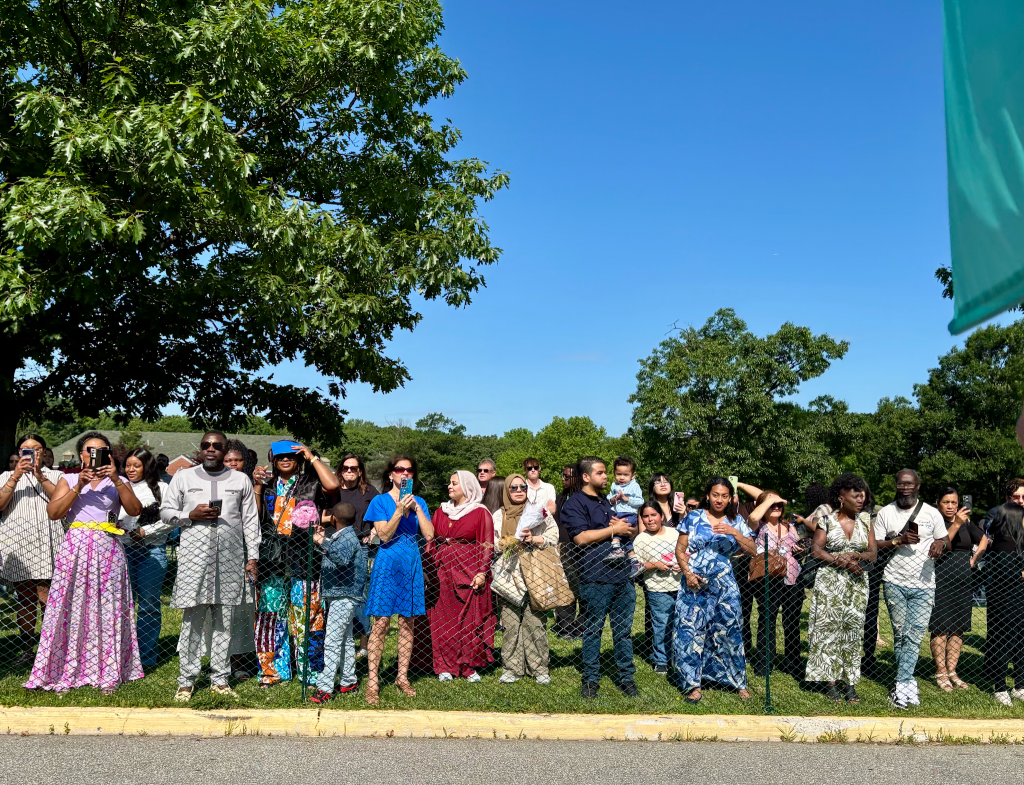
STATEN ISLAND, N.Y. — Before President Timothy Lynch took the podium at CSI’s Spring 2026 Commencement Ceremony, chants of “Let them speak” rose from the crowd, underscoring a controversy that has now overshadowed the college’s two most recent graduations.

A total of 2,326 undergraduate and graduate students attended the commencement ceremony alongside their families, loved ones, professors, faculty, and staff. After years of classes, assignments, hard work, and sleepless nights, graduates finally had the opportunity to walk across the stage and celebrate their achievements.
“Many of you, Class of 2026, were already tested. You have taken trains and buses at night. Some of you are the first in your family to graduate college,” said Chancellor Félix V. Matos Rodríguez. “We will always have your back, and this will always be your home.”
Michelle Danglade, who earned a bachelor’s degree in history, served as valedictorian, while Ashley Villalva, a political science major from the Macaulay Honors College, was named salutatorian. As the top academic achievers in their class, both students traditionally have the opportunity to address graduates during commencement through live speeches. However, President Timothy Lynch denied them that opportunity for the second consecutive year.
CSI’s valedictorian and salutatorian have been required to pre-record their remarks for the past two years. Last year’s valedictorian, Neebal Abuhamdeh, graduating with a Bachelor of Arts in English Linguistics, a 47-year-old Palestinian American graduate, stood silently at the podium while her speech played on a screen. Rather than addressing her fellow graduates directly, she watched her recorded remarks from the audience.
As Lynch was introduced during the ceremony, several audience members chanted, “Let them speak.” Faculty and students also protested President Lynch’s speech by turning their backs to him as he spoke and duct taping their mouths.
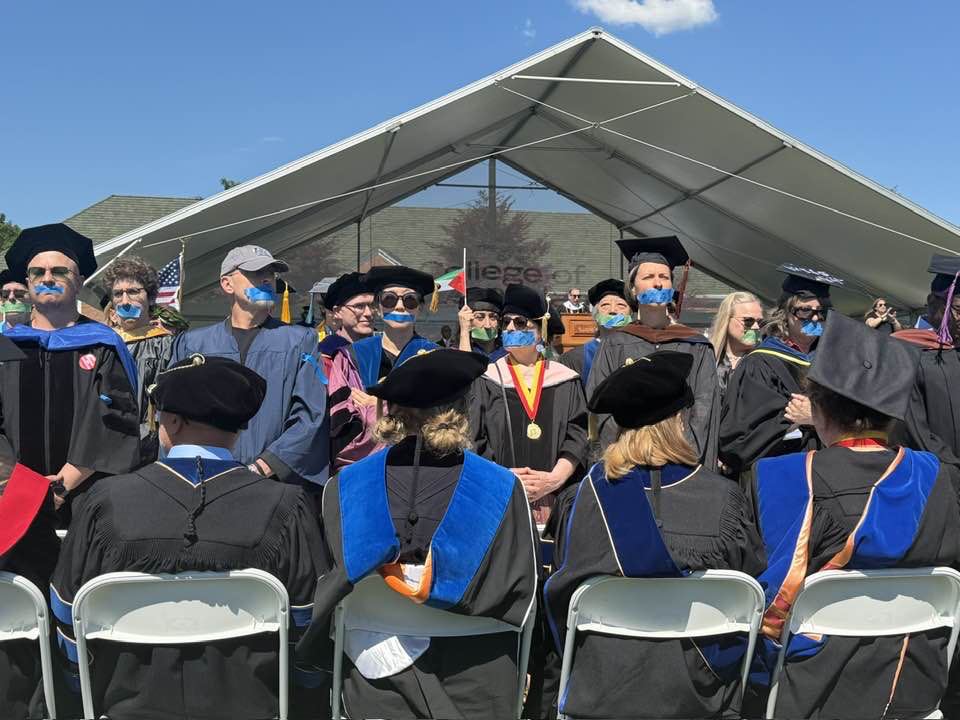
In the weeks leading up to commencement, Lynch sent several emails outlining what students could and could not do during the ceremony, including restrictions on signs and flags. In response, an ad hoc group of students and faculty formed to oppose the administration’s decision requiring student speakers to pre-record their commencement addresses.
The group expressed unanimous opposition to the policy. Despite their objections, the valedictorian and salutatorian were still not permitted to deliver their speeches live.
On April 30, the CSI Faculty Senate passed a resolution urging the administration to restore live student speeches at commencement. The measure passed overwhelmingly, with 29 votes in favor, two opposed, and four abstentions.
“In our view, President Lynch’s decision conveys an unwarranted distrust of our students. It debases and demeans them, as well as the entire campus community,” a representative of the ad hoc group said. “This is no small thing. Rather, it is a particular instance of a larger problem, namely the widespread attack on academic freedom that we have witnessed recently.”
The controversy has emerged at a time when debates over free expression and censorship continue to shape higher education nationwide. Colleges and universities have historically served as spaces for protest, debate, and the exchange of ideas. Critics of the policy argue that requiring student speakers to pre-record their remarks undermines those values and limits students’ ability to express themselves during one of the most significant moments of their academic careers.
It is also worth noting that other speakers at the commencement ceremony were allowed to deliver their remarks live and were not required to pre-record their speeches.
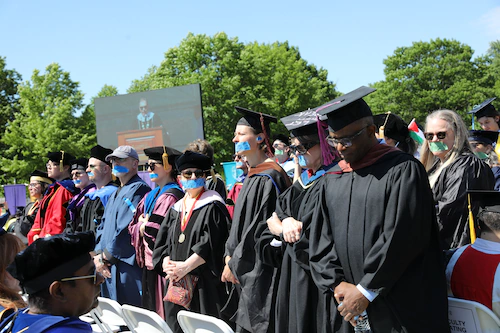
Professor Michael Paris, who teaches constitutional law, civil liberties, and public policy and has been a member of the CSI faculty since 2007, expressed disappointment with Lynch’s decision.
“You’ve gotta give students leeway to address the agonies of our times,” Paris said. “Mr. Lynch, you don’t own this college. We all own it, and we believe in freedom of thought and freedom of expression. We believe adults have to tolerate some degree of messages and ideas they may not like. That’s what a university is. We thought it was important to at least gently and nondisruptively send a message today.”