
Through games and teamwork, students turn learning sign language into a fast-paced way to build confidence, connection, and real communication skills.
By: Joseph Lonardo
What looked like a game show was part of the American Sign Language club’s plan to make learning active and bring students together through visual communication.
“The goal right now is to help everyone learn new signs in fun ways,” said Ferguson. “Jeopardy and other games keep us thinking fast and signing faster.”
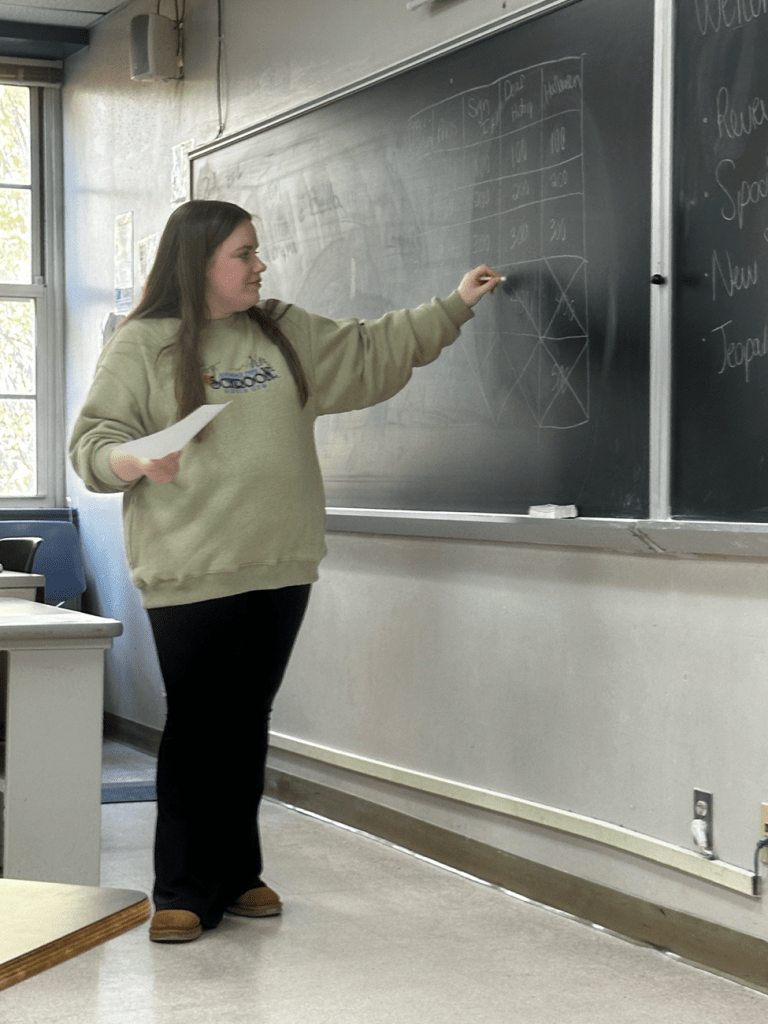
Laughter and hand motions filled a classroom on a Thursday afternoon as students competed in a game of sign language Jeopardy. The chalkboard displayed categories like “Deaf Culture” and “Finger Spelling,” while each team tried to form the correct sign before time ran out.
Each week, the club designs activities that challenge members to use what they’ve learned in previous meetings. One game, called “New Signs Only,” allows students to sign only new words introduced that day, forcing them to remember and apply what they just learned. The process helps members test memory, awareness, and speed in a setting that feels both fun and challenging.
The lessons are fast-paced but supportive, giving each member time to practice and watch others. Every round creates chances for students to learn by observing how someone else signs the same word. Mistakes are treated as learning moments that help everyone improve together and gain confidence in their progress.

Students form a circle in front of the board to see one another clearly as they take turns signing and guessing. The setup makes it easier to follow movement and engage directly with others. The club uses this to strengthen how students communicate while learning new vocabulary.
“Communication plays the biggest role here,” said Valentin. “The whole purpose of our club is to learn how to connect with people through sign language.”
The Jeopardy game includes signs for words like “dark,” “fluorescent,” and “goat,” arranged under categories related to language and culture. Players have thirty seconds to answer and must sign correctly before time expires. Combining words and numbers, such as “ninety-nine cents,” helps strengthen memory and speed during play.
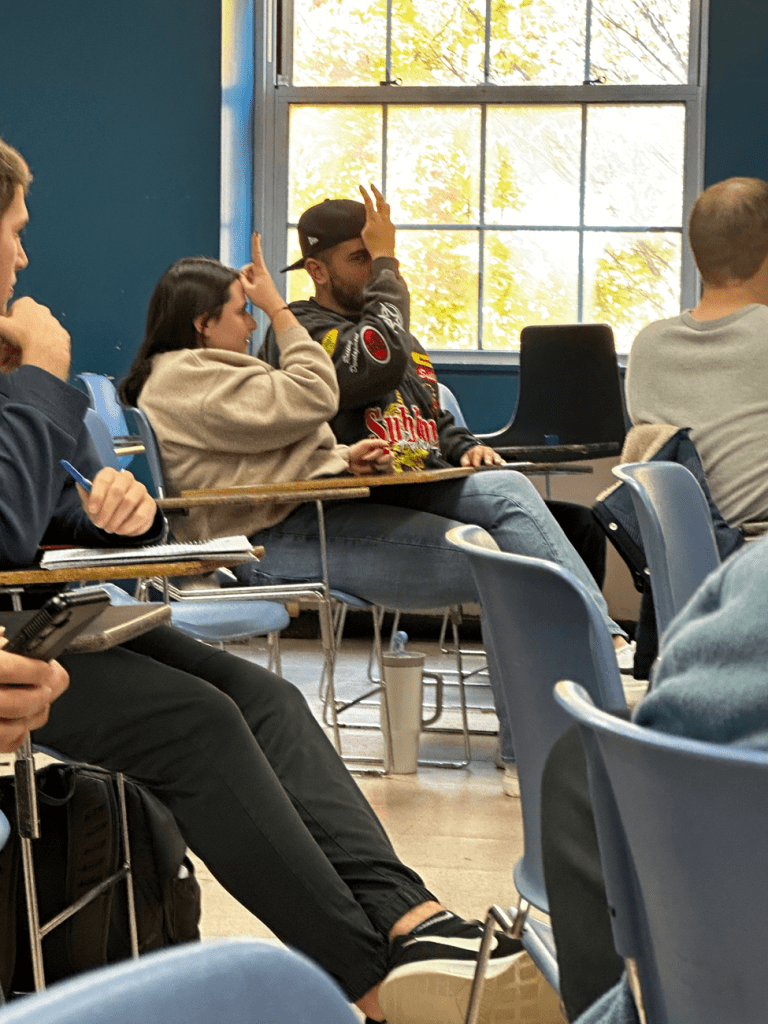
The games demonstrate how learning sign language brings together teamwork, attention to detail, and competition. Students begin to see how sign language depends on movement as much as grammar or spelling. Each motion becomes part of communication that words alone can’t convey.
Members also review lessons about Deaf history and culture during each session. Topics include schools for the deaf and the Oralism Movement, which once discouraged signing in favor of speech. The mix of games and discussion keeps meetings both social and educational.
The lessons are open to everyone, from students in ASL classes to those learning sign language for the first time. This mix builds cooperation and gives students a chance to learn from one another. The range of skill levels makes each meeting more interactive and helps students feel part of a growing community.
“Every meeting has a mini-lesson and a theme,” said Artz. “This week we called it Spooktacular Signs, and it helped everyone learn Halloween-related words while having fun.”

Games and group lessons build consistency in how students practice each week. Meetings begin with a short review of signs learned the previous week before introducing new ones. The repetition strengthens what members already know while preparing them for more advanced lessons.
The club also focuses on how students can use ASL outside of class. Learning to sign offers practical benefits in communication and can support work in fields like education and social services. The group structures its activities to help students apply what they learn beyond the classroom through shared practice and collaboration.
National organizations such as the National Association of the Deaf promote ASL education and awareness across the country. The club mirrors that goal by creating a space where communication feels open and understood. Every meeting encourages growth through language that bridges gaps between people and builds understanding across communities.
“Building that space where people feel comfortable to sign, learn, and connect is what matters most,” said Ferguson. “That’s what keeps this club growing.”
