
Education is proving to be one of the most effective tools in preventing domestic violence, empowering students to recognize warning signs and build safer relationships.
By: S. Manai

In the age of TikTok and Instagram, it seems like everyone can spot a red flag or a green one in a potential partner. It has become a social media trend to dissect dating habits, labeling the seemingly bad ones as red flags and the good ones as green flags. What usually plays out as lighthearted online humor, however, became a serious teaching tool at CSI, where students learned how some of these red flags can signal early signs of domestic violence.
In a patriarchal society where women have historically been denied equal access to opportunity and education, they are also more vulnerable to abuse. By raising awareness through education, The Bertha Harris Women’s Center at CSI hopes to shift the focus from reacting to abuse toward preventing it altogether.
“While at the center our goal is to uplift the voices of women, our role is to look out for our campus community as a whole,” said Emily Zinnanti. “Through the presentation, I conveyed how abuse can exist on spectrums; emotional and verbal abuse are just as valid and hurtful, even if we cannot physically see its remnants.”
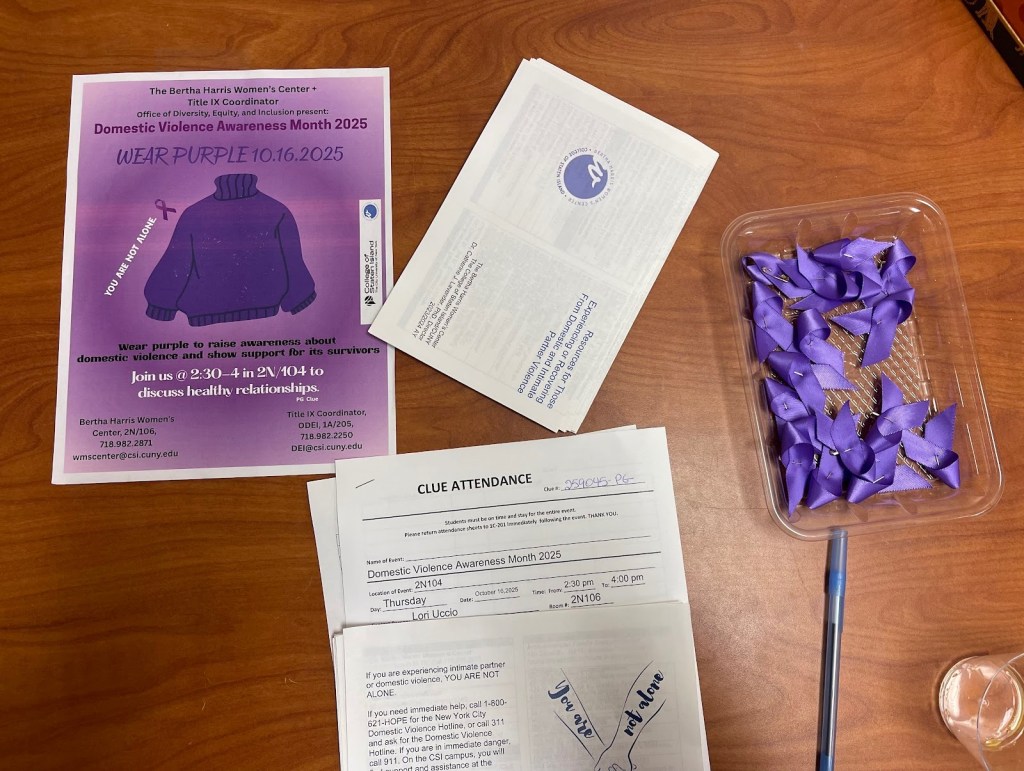
Interns at the Bertha Harris Women’s Center advocate for education as a tool for prevention. Held every year during October, which is also Domestic Violence Awareness month, this event made one thing clear: informed students are safer students. Through discussions on recognizing early signs of abuse and understanding healthy relationships, the event urged attendees to view education not just as empowerment but as protection.
The goal wasn’t just to bring together women and those affected by domestic violence, but more importantly, to raise awareness, educate, and advocate for prevention as protection.
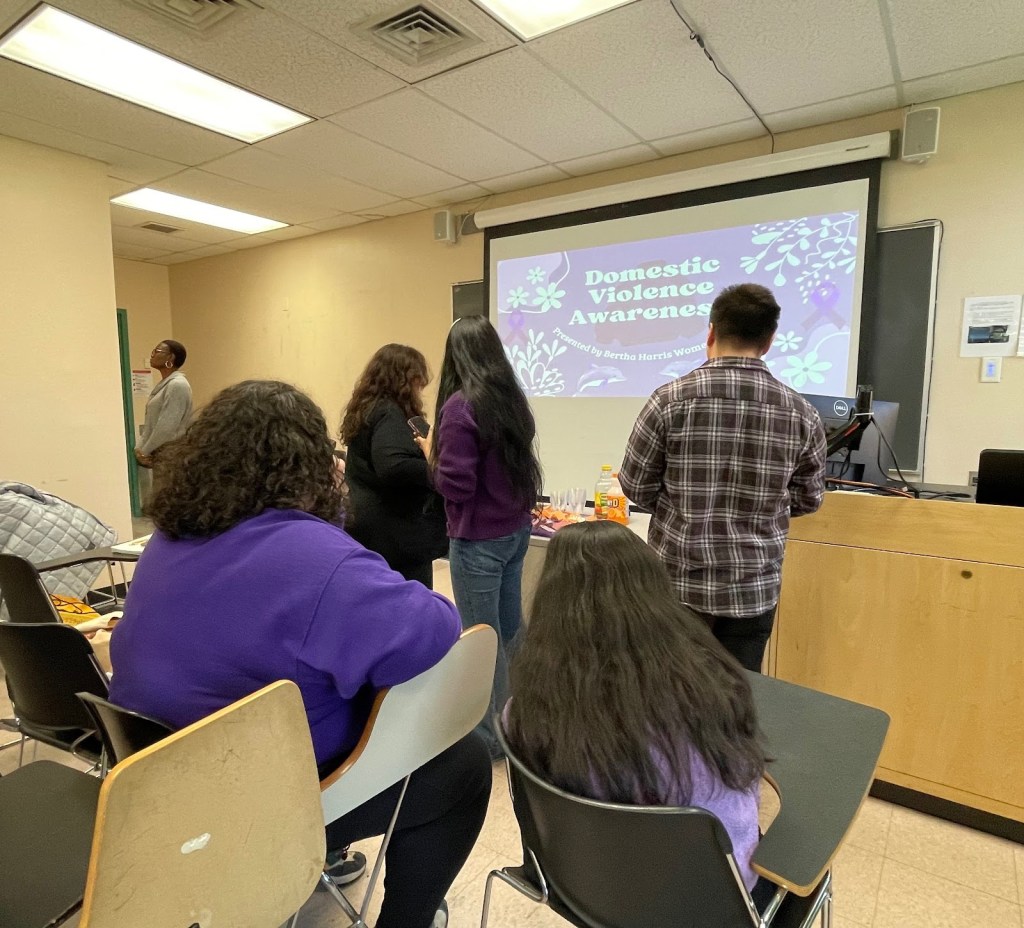
Among young women, education builds both awareness of rights and access to resources, both factors that reduce dependence on abusive relationships. In other words, when women gain education, they are better positioned to recognize unhealthy dynamics, leave harmful situations, and assert independence, which shifts the narrative from survival to empowerment.
One event attendee, TonyMarie Jamaleddine, wore purple in solidarity and sat front row and frequently engaged in conversation with the presenters. She reflects on her understanding of domestic violence and the importance of learning about it.
“Prevention education is needed because once you’re in it, it may be very hard to get out depending on circumstances,” said Jamaleddine. “We’re all human, we all can miss the signs, an event like this educates you on how to see them.”
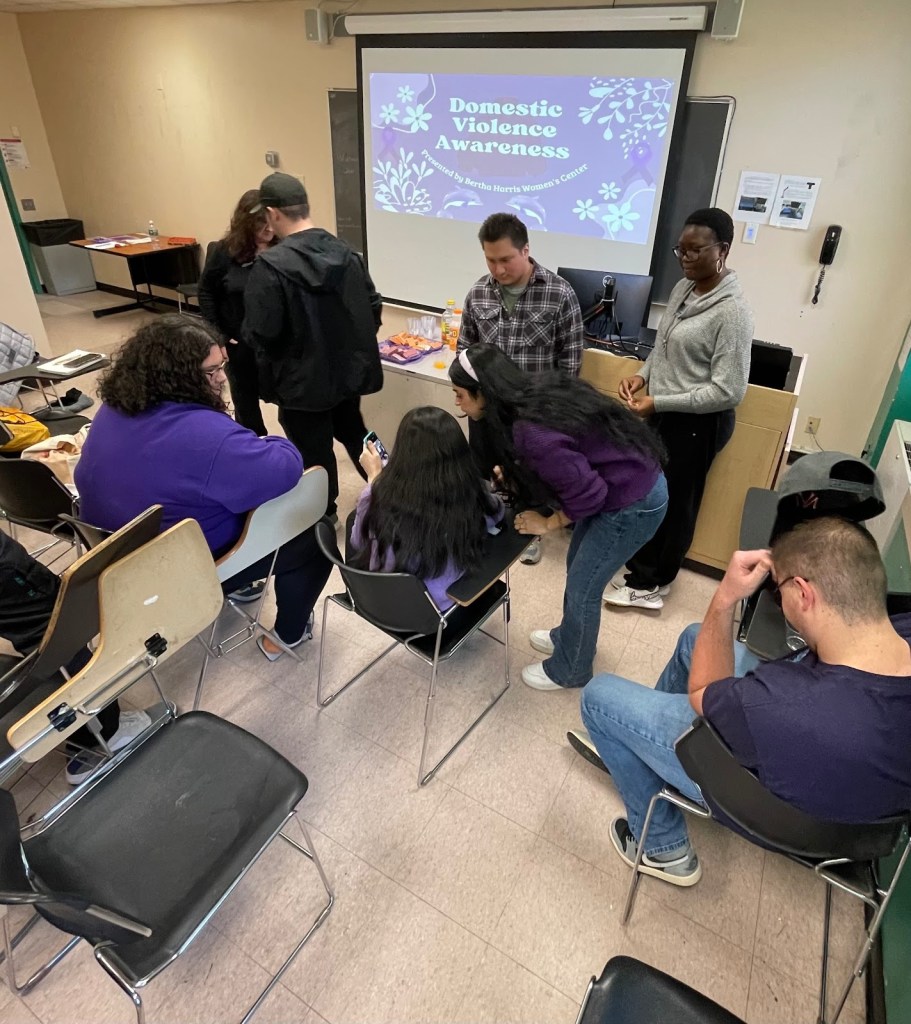
The interns at The Bertha Harris Women’s Center shared on campus resources including The Counselling Center and The Wellness Drop-in Center, and other sources on Staten Island like The NYC Family Justice Center. All of which are free, confidential, and available 24/7.
A recent study found that increased educational attainment among women correlates with lower levels of intimate partner violence, in part because education promotes financial independence, critical thinking, and awareness of one’s rights
Shibani Chakravorty, Adjunct Lecturer at CSI and PHD student, shares her insight
“We sort of have these assumptions that if a woman continues to stay in the relationship, then she is somehow not critically conscious enough,” said Chakravorty. “There are definitely many practical reasons for which many women are often not able to exit a relationship, which can have to do with their own family, social stigma; a lot of character assassination happens in many societies that we live in.”
The presentation also included a correlation between the COVID-19 lockdown and the rise of domestic violence, all backed by research from the National Commission on COVID-19 and Criminal Justice. Reports of domestic violence in the United States increased by approximately eight percent following stay-at-home orders in 2020. As a result of the lockdown, even when life was slowly going back to normal, the aftereffects of not speaking to people, financial hardship, and loss of family and friends to COVID-19 still lingered.
“Domestic violence is a social issue which affects individuals and families across all backgrounds,” said Zinnanti. “Raising awareness about it should be a consistent effort.”
